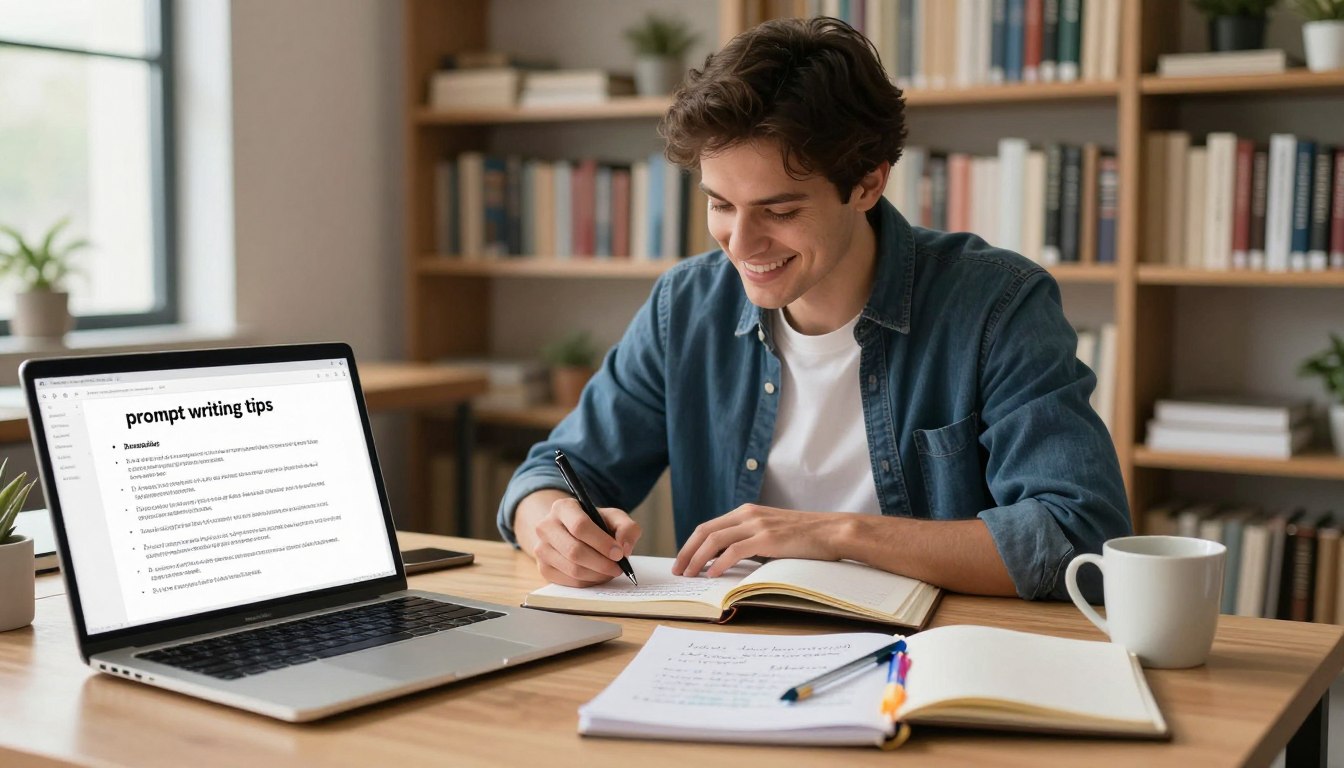

Have you ever wondered how a few clear instructions can turn flat text into a believable, intense scene that reads like it was lived, not listed?
This short guide shows you how to get consistent results fast. 92% of Sudowrite users reported finishing manuscripts quicker when they used purpose-built tools. You will see why a specialized tool often outperforms manual engineering.
The Muse model handles mature content without the usual blocks, so you keep your voice and control intensity with precision. That means characters feel real, emotions land, and the pacing stays natural.
You will learn how to set context, shape character dynamics, and use concise instructions so your prompts produce scenes that read like crafted fiction rather than technical notes.
Key Takeaways
- Use focused context: brief cues beat long, vague commands.
- Leverage purpose-built tools to speed up your process.
- Design scenes so characters feel lived-in, not textbooked.
- The Muse model reduces friction with mature content handling.
- Consistent cues keep dynamics steady across a manuscript.
Understanding the Mechanics of NSFW Prompt Writing Tips
Effective adult image generation starts with clear, structured instructions that tell the model exactly what you want.
An NSFW prompt is a compact set of directions an AI uses to render explicit images. It tells the model the subject, mood, style, and level of detail you expect.
Tools like Stable Diffusion, Aitubo AI, and Perchance are free ways to access NSFW generators. Each tool reads your text and turns it into an image.
Think of a simple example: a woman on the beach at sunset. You can expand that basic description into a detailed artistic image by adding color, lighting, pose, and clothing notes.
- More detailed text usually yields better results.
- Describe the type of art, camera angle, and mood.
- Experiment with different generators to find the best fit.
Follow the step-by-step approach: craft, test, and refine. Every generator interprets your words differently, so iterating is the fastest way to consistent results.
Why Generic Prompting Fails for Adult Content
Generic, one-line cues rarely capture the heat and history readers expect from adult scenes. You get bland lines instead of lived emotion when a model lacks context.
The Problem with Clinical Prose
Without focused context, many generators default to clinical language. The result is mechanical descriptions that strip chemistry from a scene.
This beige output makes characters feel flat and turns intimate moments into technical notes rather than storytelling.
- Generic prompts produce uniform, emotionless sentences.
- Standard prompt generators often miss tonal nuance and face-level detail.
- People expect texture; they get sterile prose instead.
The Importance of Story Memory
Story memory matters because emotional stakes build over time. When a model can read preceding context, it preserves chemistry and the slow burn between characters.
For example, Sudowrite’s Write feature reads up to 20,000 words of prior text plus Story Bible data. That depth helps your scenes land with the right history, tone, and continuity.
Avoid expecting magic from a single line. Focus on quality context and a purpose-built tool to keep images, art, and scenes feeling true to your narrative.
Essential Anatomy of a High-Quality NSFW Prompt
Start by naming the subject and the exact body details you need; clarity here anchors the entire image.
Structure matters: front-load the subject, then add pose, setting, and lighting. This order gives the generator clear control over the final output.
Structuring Your Subject and Style
Include concrete physical details about the woman or other subjects. Note height, build, skin tone, and any distinguishing marks. These specifics improve realism and reduce guesswork.
Define the art style next. Say photorealism, oil painting, or high-contrast editorial. Avoid vague praise words that act like magic and mean nothing to the model.
“Good structure turns vague intent into repeatable results.”
- Subject: woman, 5’6″, athletic build
- Pose: seated, three-quarter view
- Setting: dusk beach, warm rim light
- Style: photorealism, 85mm, shallow depth
| Element | Why it matters | Example | Effect |
|---|---|---|---|
| Subject | Anchors scene | Woman, mid-30s | Accurate image |
| Body | Reduces ambiguity | Athletic, freckled | Realistic output |
| Style | Controls look | Photorealism | Consistent results |
| Setting | Sets mood | Sunset beach | Better generation |
Mastering Context and Character Consistency
Keep character details handy so every scene preserves personality and motive across your manuscript.
Use a Story Bible to store physical notes, habits, and the emotional register for each woman or supporting figure. When you feed those cards to the model, it keeps behavior steady over time.
Consistent character cards help the AI reproduce the right tone during intimate moments. This prevents drift into generic tropes and keeps chemistry credible in every scene.
Design each prompt to reference the Story Bible and include clear style notes about voice, pacing, and art direction. That step gives you practical control and reduces the need for tweaks later.
“Ground each image or passage in context so the model understands relationships and stakes.”
- Save personality and physical traits in one place.
- Reference character cards in every new prompt.
- Use consistent style cues to preserve voice.
- Treat consistency as a mandatory step, not magic.
Result: more reliable images and scenes, better continuity across chapters, and control that feels intentional rather than accidental.
Controlling Intensity and Pacing in Your Scenes
Pacing shapes heat: the way you space sentences decides whether a scene breathes or rushes. Use short lines to speed the moment and longer, sensory sentences to pull the reader into a slow burn.
Use tone shifts to change rhythm. A sudden quiet sentence after a heated paragraph resets focus. That small move makes the love and tension between characters feel earned.
Using Tone Shifts
Vary sentence length and diction to guide emotional beats. Swap an abrupt verb for a soft adjective to soften mood. These deliberate shifts let you keep control of the scene’s flow.
Managing Sensory Details
Ground intensity in the character’s body. Describe touch, sound, and taste in focused phrases so images and text feel embodied, not listed.
“Small, deliberate beats let physical reactions land with real force.”
- Generate scenes in short bursts to preserve pacing.
- Detail the face and expressions to anchor emotional clarity.
- Use preceding text so the model senses natural rhythm.
| Focus | Why it matters | Quick example |
|---|---|---|
| Pacing | Controls tension | Short sentences, then a long line |
| Sensory | Embodies scene | Warm breath, metallic taste |
| Face | Shows intent | Brows knit, smile softens |
Technical Adjustments for Better Image Generation
A few precise settings can stop common generator errors and produce more natural skin tones.
Negative prompts serve one clear role: tell the model what to avoid. Use them to remove extra fingers, malformed limbs, or stray artifacts. Think of negative lists as guardrails that improve final output.
The Role of Negative Prompts
Be explicit. Say what you do not want in the scene so the generator reduces unwanted elements. This step gives you direct control over content and keeps iterations minimal.
Managing Resolution and Aspect Ratio
Generate at native resolution when possible. For SDXL and Pony models that means 1024×1024. Staying native prevents strange repeats and preserves image quality for professional use.
Selecting the Right Sampler
Sampler choice affects texture. DPM++ 2M Karras is recommended for realistic skin and smoother tones. Pair correct sampling with precise text encoding to refine results.
| Adjustment | Why it matters | Quick result |
|---|---|---|
| Negative prompts | Excludes artifacts | Cleaner image |
| Resolution | Prevents repeats | Sharper output |
| Sampler | Controls texture | Realistic skin |
Avoiding Common Pitfalls in Prompt Engineering
Small ambiguities in a request can force a generator to guess details you wanted fixed. Be explicit about the subject, face, and body so the model does not invent features.
Don’t be vague. If you describe a woman, name her attire, expression, and position. Clear facts reduce random variation and improve image quality.
Skip the magic one-liner. Expecting a single line to carry history and motive rarely worked. Add brief context about characters or prior actions to preserve consistency.
Stacking too many quality tags often backfired. Overloaded modifiers confused models and degraded generation. Choose a few strong style cues instead of a long list.
- Use negative prompts for anatomy to avoid distorted hands and faces.
- Keep language simple so diffusion models parse your meaning.
- Reference stable diffusion or your chosen generator when you need tool-specific fixes.
“Clear, logical instructions let the model render the love and tone you expect.”
Learn from errors and iterate. Small, precise edits to words, subject, and style produced steadier, higher-quality images and scenes.
Selecting the Right Tools for Your Creative Goals
A well-matched toolchain can cut hours from your process while improving consistency across scenes. Pick platforms that align with your purpose: image generation, long-form text, or hybrid workflows.
Fiction-focused models handle adult content and character arcs better than general-purpose AI. They keep tone, pacing, and character memory intact so your characters feel whole across a manuscript.
Comparing Fiction-Specific Models vs General Tools
Look for features like a Story Bible, easy tone shifts, and built-in prompt generator presets. These save time and reduce manual edits.
Gianmarco published 270,000 words in a year using Sudowrite. That level of output shows how specialized tools speed work while preserving character depth and style.
- Fiction models: stronger memory, tuned language, better scene continuity.
- General tools: wider access, often better for art or Stable Diffusion image generation.
- Hybrid setups: mix text models with image generators for consistent visual and narrative output.
Test platforms against your goals. Time invested learning a model pays off in quality and faster results.
“Choose tools that match your creative purpose, not the other way around.”
Ethical Considerations and Platform Compliance
Respecting consent and platform policies should be your first step before you run any generator.
Always confirm a platform explicitly permits adult content and image generation. Using tools or sites that ban explicit material risks losing access and your work.
Never create non-consensual intimate imagery or anything involving minors. These acts are illegal and violate every service’s rules.
Read the terms of service and safety policies for any platform you use. Check age-verification measures and content controls before you upload or request images.
- Use platforms that document allowed material and moderation processes.
- Keep records of consent for any real people referenced in your art.
- Report policy gaps and avoid services that lack safeguards.
| Area | Why it matters | What to check |
|---|---|---|
| Permissions | Protects your account | Explicit rules for adult content |
| Safety | Prevents abuse | Age checks, moderation teams |
| Legality | Avoids criminal exposure | Bans on non-consent and minors |

“Operate within terms and ethical norms to protect your creativity and your access.”
Conclusion
Your best work comes from pairing focused art direction with concise scene memory and steady pacing. Give the model clear context, keep iterations short, and save character facts so each scene stays true to your intent.
Use targeted prompts and a repeatable process rather than hunting a single trick. This guide shows you how to control pacing, maintain character consistency, and shape intensity with practical steps.
Ethics matter: follow platform rules and consent norms while you experiment. The examples here are a foundation — refine them to match your style and the kind of nsfw content you want to create.
Iterate in short bursts and you’ll produce cleaner prose and richer art that reflect your vision.
FAQ
What makes a clear adult-scene instruction more effective than a vague one?
You get better results when you give concrete details about scene elements: characters, setting, mood, and pacing. Specify visual and emotional cues, such as lighting, wardrobe, and the relationship between people, so the model can prioritize relevant features. Keep sentences short and direct to improve clarity.
How do you balance explicit content with coherent storytelling?
Focus on character motivations and scene flow first, then layer in intensity and physical description. That way your output reads like a believable scene instead of a list of acts. Use consistent perspective and recurring traits to keep characters coherent across multiple passages.
What role does memory and continuity play in creating longer scenes?
Continuity prevents contradictions and preserves character arcs. Use brief reminders of prior details—appearance, relationships, emotional state—so later sections remain consistent. This helps the model maintain voice, behavior, and physical attributes across the work.
How should you structure descriptions of people and settings to avoid confusion?
Present the subject first, then add modifiers: age range, body type, facial features, clothing, and posture. Follow with setting information—location, time of day, lighting—and finally the desired tone. This predictable order reduces ambiguity and yields cleaner output.
What techniques improve scene pacing and intensity control?
Use short, punchy sentences for high-intensity moments and longer, descriptive sentences for buildup. Insert deliberate pauses by describing sensory details, and adjust sentence rhythm to match the scene’s emotional arc. Flag key escalation points so the model understands where to increase intensity.
How can you manage sensory detail without overwhelming the reader?
Prioritize two or three strong senses per passage—usually sight, sound, and touch—and keep descriptors specific and concrete. Avoid listing excessive adjectives. Clear, focused sensory anchors enrich the scene while preserving readability.
What are negative constraints and why are they important in image generation?
Negative constraints tell the tool what to avoid, such as unwanted styles, artifacts, or prohibited content. They sharpen results by reducing noise and irrelevant elements. Use concise exclusions for clarity: unwanted poses, background clutter, or hallucinated features.
How do resolution and aspect ratio affect visual output quality?
Higher resolution yields finer detail but requires more compute and can introduce artifacts if the model isn’t tuned. Choose an aspect ratio that complements your composition—vertical for portraits, wide for scenes—and match resolution to the final display or print size for best results.
How do different samplers or generation methods change results?
Samplers influence texture, sharpness, and the degree of randomness. Some produce smoother, more photorealistic images while others preserve fine artistic detail. Test a few options and keep notes on which sampler aligns best with your creative goals and platform constraints.
What common mistakes reduce output quality and consistency?
Overly generic briefs, contradictory details, excessive adjectives, and sudden tone shifts confuse generators. Repetition of the same descriptor weakens imagery. Proof and edit briefs to remove conflicts, simplify language, and maintain consistent voice throughout.
How do you choose tools that match your creative needs?
Evaluate models and editors by output style, supported formats, and community resources. Fiction-focused models often handle narrative nuance better; general tools may excel at photorealism. Consider workflow features like inpainting, upscaling, and prompt templating when selecting a platform.
What ethical and platform rules should you follow when producing adult material?
Always respect consent, privacy, and intellectual property. Follow platform terms and local laws about explicit content, age verification, and content moderation. Avoid depicting real people without permission and ensure any models or assets you use are licensed appropriately.